Call Now!


Sliding Folding Partition: Types, Benefits and Applications in Modern Buildings
Modern architecture is moving toward spaces that can perform more than one function. A conference room may need to become a training area, a hotel hall may need to accommodate separate events, and an office may require private rooms during one part of the day and an open workspace later.
A sliding folding partition offers a practical way to achieve this flexibility. Instead of constructing permanent walls, movable panels can be used to divide a larger area and then moved aside when an open layout is required.
With different panel constructions, finishes, thicknesses and acoustic options available, these partition systems can be adapted to a wide range of commercial and institutional environments.
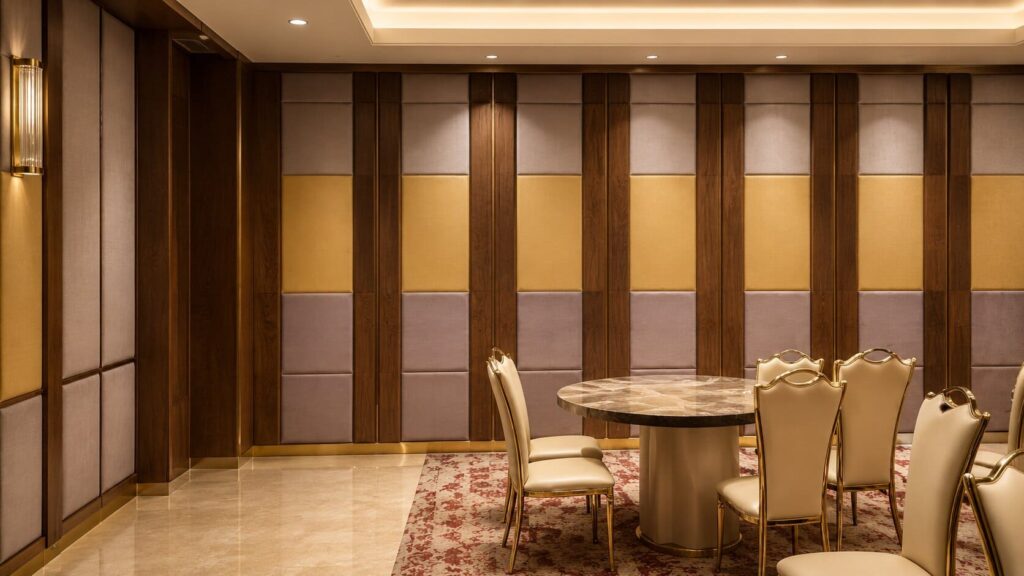
What Is a Sliding Folding Partition?
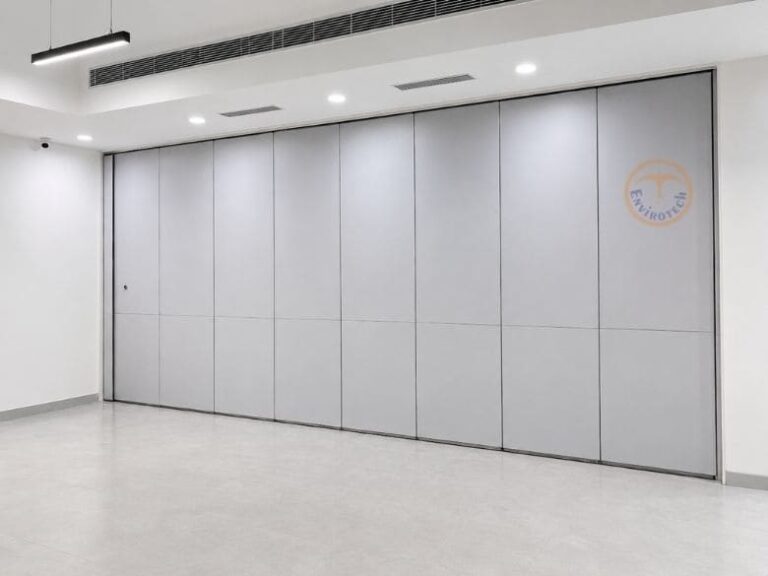
A sliding folding partition is a movable room-divider system made from a series of connected panels. The panels move along a track and can be folded or positioned in a designated parking area when the opening needs to be cleared.
The major difference between this system and a conventional wall is flexibility. A fixed wall permanently establishes the layout of a room, whereas a movable partition allows the same floor area to be configured in different ways.
This makes the system useful for spaces where room requirements change frequently.
Different Types of Sliding Folding Partitions
The right partition depends on the building’s purpose, available space, design requirements and desired level of privacy or sound control.
Acoustic Sliding Folding Partition:
An acoustic sliding folding partition is intended for areas where reducing sound transmission between adjoining spaces is important.
These systems can be considered for boardrooms, conference rooms, classrooms, hotels, training areas and multipurpose halls. Acoustic performance is influenced by the complete construction, including panel composition, joints, seals, thickness and installation.
Therefore, the required acoustic specification should be established before selecting the partition system.
85 mm Sliding Folding Partition:
An 85 mm configuration can be used where a specific panel thickness is required for the project. It can be suitable for offices, meeting rooms and other commercial interiors where flexible space division is needed.
The final specification should be selected according to the opening dimensions, application and technical requirements.
100 mm Sliding Folding Partition:
A 100 mm sliding folding partition can be specified for projects requiring a particular panel construction and performance level.
It may be considered for larger commercial spaces, conference facilities and other environments where the partition needs to meet defined structural, functional or acoustic requirements.
Glass Sliding Folding Partition:
Acoustic glass sliding folding partition can provide a more open visual appearance while allowing areas to be separated. They can work well in offices, meeting rooms, showrooms and contemporary commercial interiors.
The use of glass can help maintain visibility and natural light between spaces, depending on the selected design.
Key Benefits of Sliding Folding Partition Systems
Flexible Space Management:
One of the main advantages of a sliding folding partition is the ability to change the configuration of a room. A large hall can be divided into smaller sections when privacy or separate activities are required.
When the partition is opened and parked, the space can return to a larger configuration.
Efficient Use of Floor Space:
Permanent walls occupy space and require a fixed room arrangement. Movable partition systems provide an alternative for buildings that need adaptable layouts.
This can be particularly useful in offices, hotels and multipurpose facilities where room requirements change regularly.
Suitable for Multiple Applications:
Sliding folding partitions can be designed for various environments, including corporate offices, hotels, educational facilities, conference centers, auditoriums and commercial buildings.
The system can be selected according to the dimensions and functional requirements of each application.
Acoustic Separation:
For applications where conversations and activities in adjoining spaces need to be controlled, acoustic partition systems can provide sound separation.
The actual performance depends on the complete partition construction, acoustic seals, installation and surrounding building elements. For this reason, acoustic requirements should be specified before selecting a system.
Customizable Finishes:
Sliding folding partitions can be available with different surface finishes to complement the interior design. Depending on the manufacturer and project specification, options may include laminates, fabrics, veneers, glass and other architectural finishes.
This allows the partition to function as both a space-management solution and part of the interior design.
Applications of Sliding Folding Partitions in Modern Buildings
- Offices and Corporate Workspace: Modern offices often need flexible meeting rooms, training areas and collaboration spaces. A sliding folding partition can allow one large room to be divided into multiple smaller spaces when required.
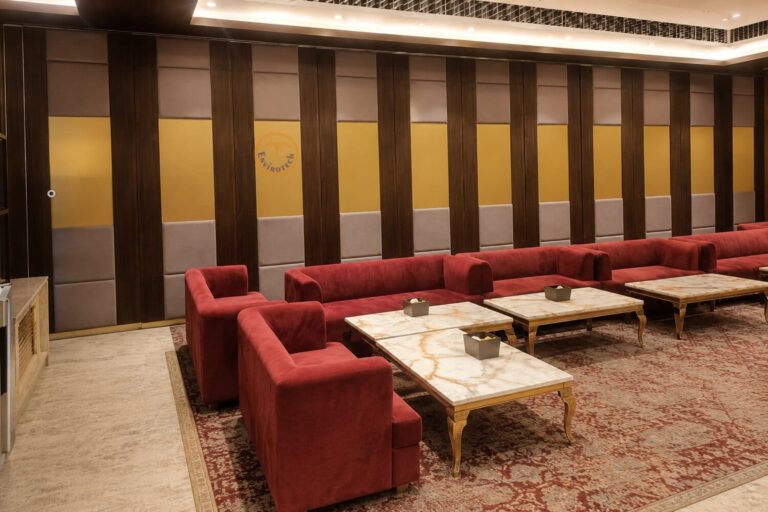
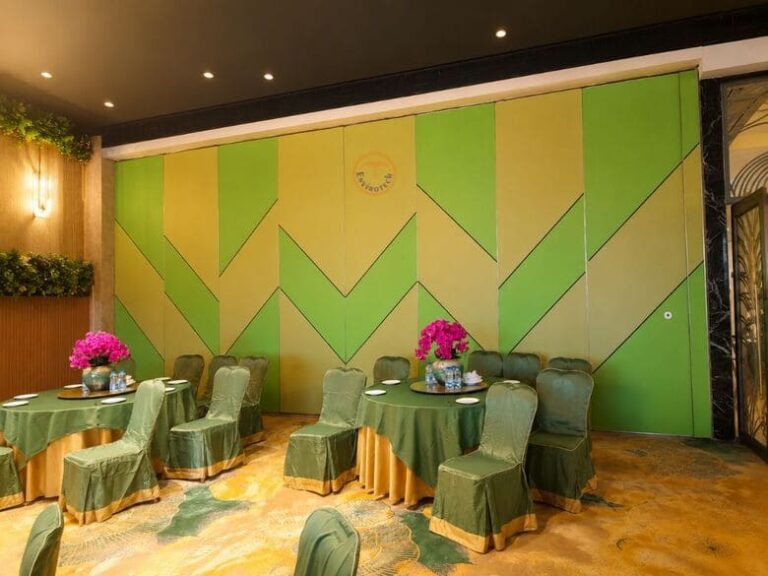
- Hotels and Banquet Halls: Hotels frequently need spaces that can accommodate different events. A large banquet area can be separated into smaller sections for meetings, conferences or private functions.
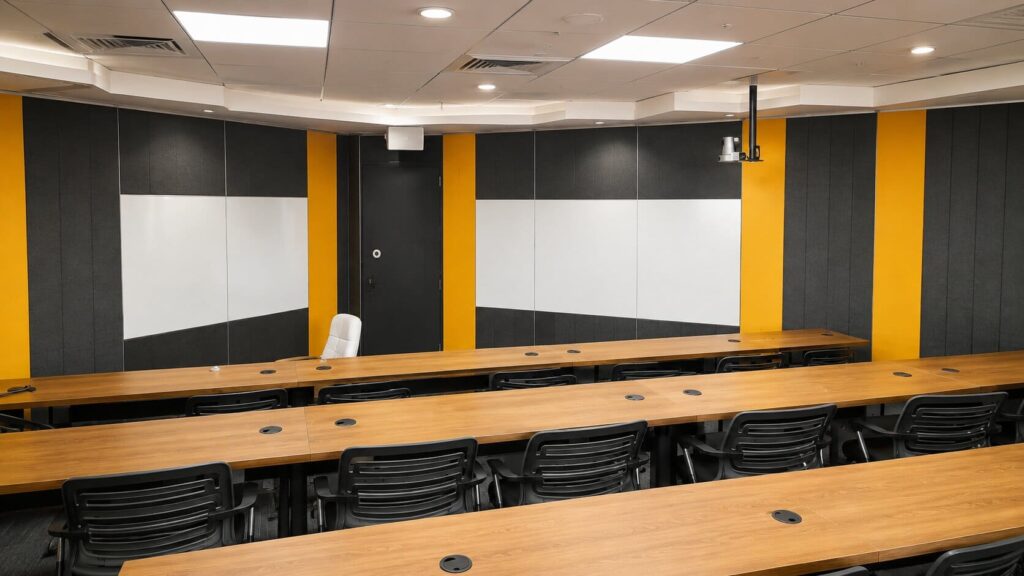
- Conference and Training Rooms: Training centers and conference facilities can benefit from flexible room layouts. Partitions allow organizers to modify room sizes according to the number of participants and event requirements.
- Educational Institutions: Schools, colleges and training facilities may need classrooms or halls that can be used for different activities. Movable partitions can help create adaptable learning and activity spaces.
- Auditoriums and Multipurpose Halls: Large halls are often used for exhibitions, meetings, performances and other events. A movable partition system can provide greater flexibility in how these spaces are configured.
How to Choose the Right Sliding Folding Partition
Before selecting a sliding folding partition, consider the following factors:
- Opening dimensions: Measure the width and height of the area where the partition will be installed.
- Acoustic requirements: Determine whether basic room division or enhanced sound separation is required.
- Panel configuration: Select the appropriate panel thickness and construction according to the application.
- Operation: Consider how frequently the partition will be opened, closed and parked.
- Surface finish: Choose a finish that suits the interior design and maintenance requirements.
- Parking arrangement: Determine where the panels will be stored when the partition is opened.
- Installation conditions: The supporting structure, track arrangement and site conditions should be evaluated before installation.
Sliding Folding Partition for Modern Space Planning
The growing demand for adaptable interiors has made movable partition systems an important consideration in modern building design. Instead of permanently dividing every room, architects and interior designers can use flexible partition systems to create spaces that can change according to their intended use.
A properly specified sliding folding partition can help organizations make better use of existing floor areas while supporting different activities within the same building.
For projects requiring sound separation, customized dimensions or specific architectural finishes, the partition should be selected according to the project’s technical and functional requirements.
Creating Flexible and Adaptable Spaces
Modern buildings need interiors that can respond to changing requirements. A sliding folding partition provides a flexible approach to dividing and combining spaces without relying entirely on permanent walls.
From offices and hotels to conference centers, educational facilities and multipurpose halls, these systems can support a wide range of applications. By considering panel construction, acoustic requirements, dimensions, finishes, operation and installation conditions, building owners and designers can select a partition system suited to their project.
For customized sliding folding partition solutions, explore Envirotech Partitions’ product range and discuss your project requirements with the technical team.